Systems thinking · Free trial · B2B2C
Accelerating the Sales Cycle
Creating a solution library for 15x faster customer insights.

Executive Summary
I led the design from concept to execution
Duration
4–6 weeks
Team
Cross-functional
Domain
B2B2C
Also on the team
- Product Manager
- Tech Lead Engineer
- 2 Engineers
Outcomes
faster customer insights
The Problem
Customers didn't want to wait 4-6 weeks to see our capabilities.
Customers spent hours explaining their goals just to find out if we could solve them.
Four to six weeks of service work from four teams stood between a customer's question and a signed contract.
Success Metric
Enable Product Qualified Leads (PQLs) for the first time
The Discovery
We approached the project as a Design Sprint
To avoid building the wrong thing, we ran a design sprint from research to prototype in 3 weeks.
I interviewed solution consultants and the client success team to map the customer journey. The process required multiple demos and email exchanges before anything could begin.
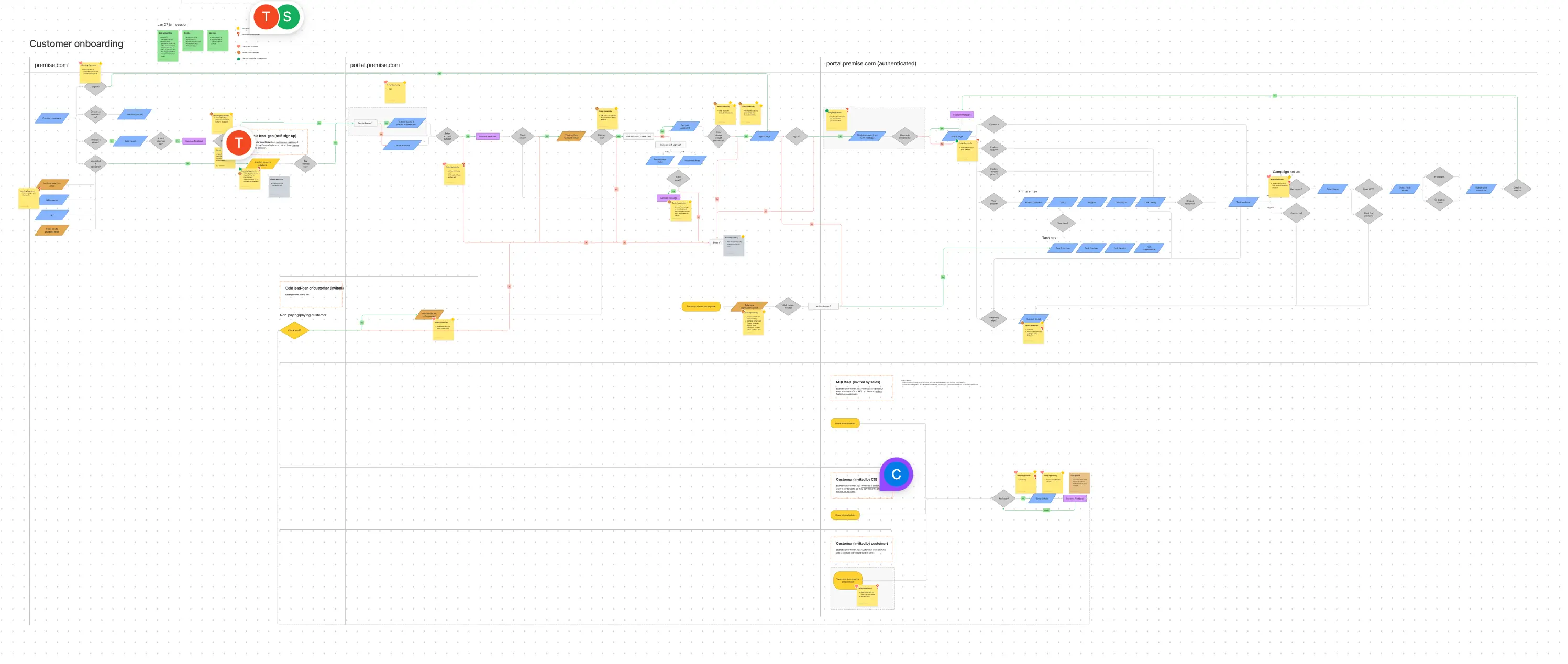
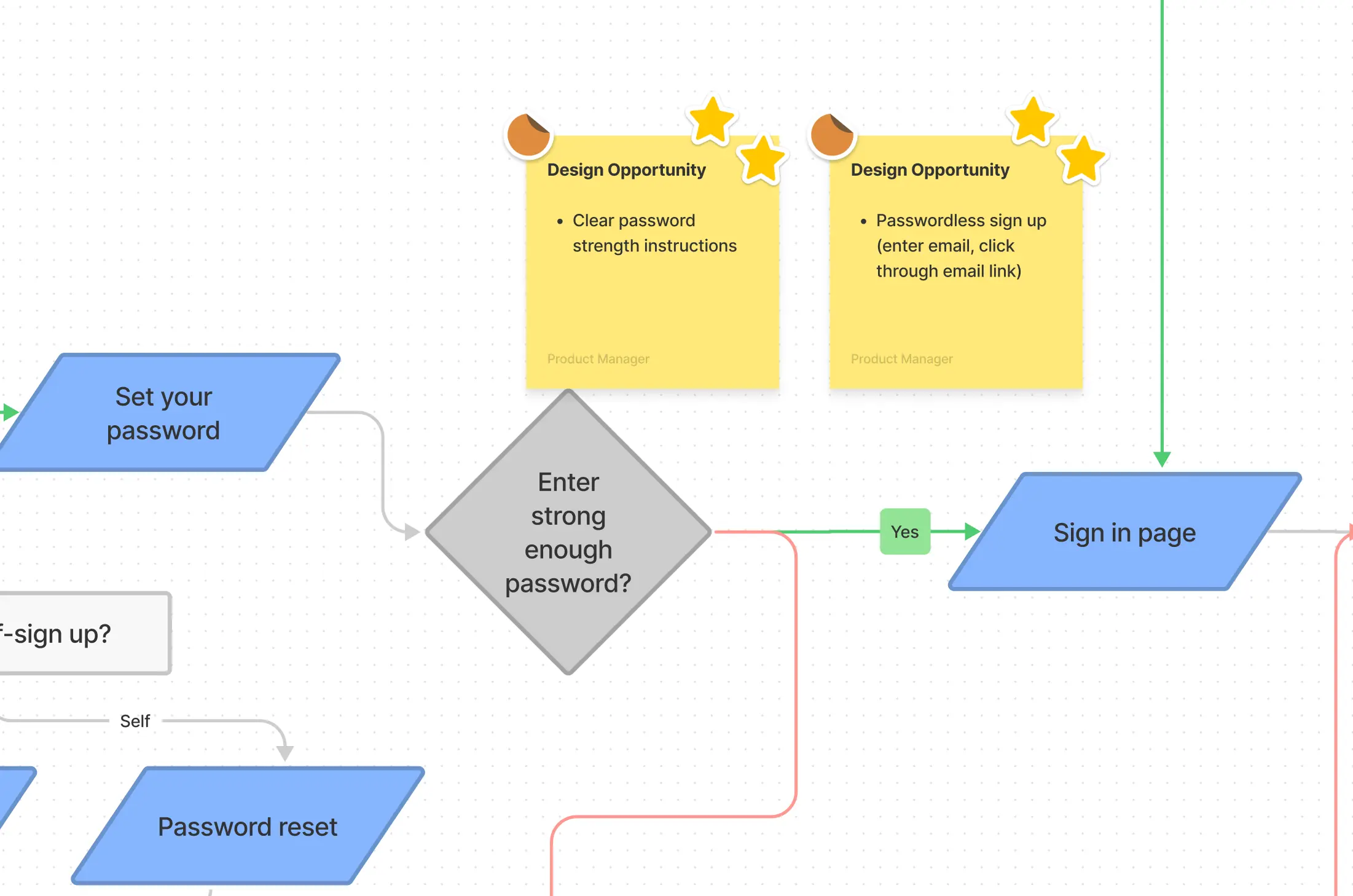
I created this diagram to map the onboarding process from the marketing site to signing up for a demo account. I discovered we lacked essential authorization features, such as organizations and roles/permissions. The sign-up flow also had usability issues.
We interviewed customers and learned...
- •They wanted to see what we were capable of and get inspired by existing solutions.
- •They didn’t need a perfect solution—an existing one that got them data faster was enough.
- •They felt like waiting 4-6 weeks to run a survey was a negative first impression that would be factored into their purchase decision.
How might we show customers value up front and deliver insights in days not weeks?
The Solution
We converged on a self sign-up demo experience
Instead of a services-heavy onboarding process, we designed a self-service demo experience where customers could browse use cases, collect data, and see results in days rather than weeks.
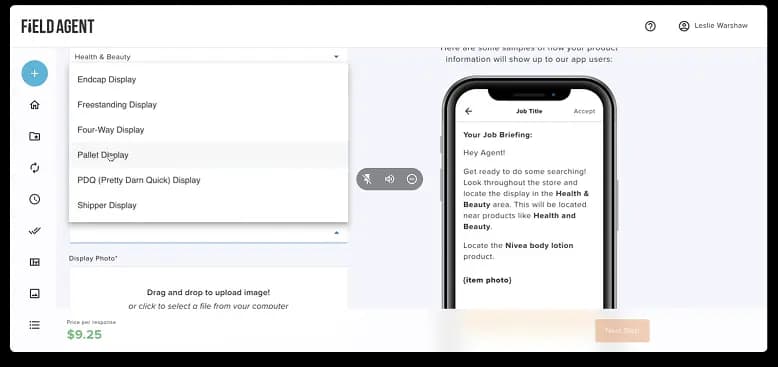
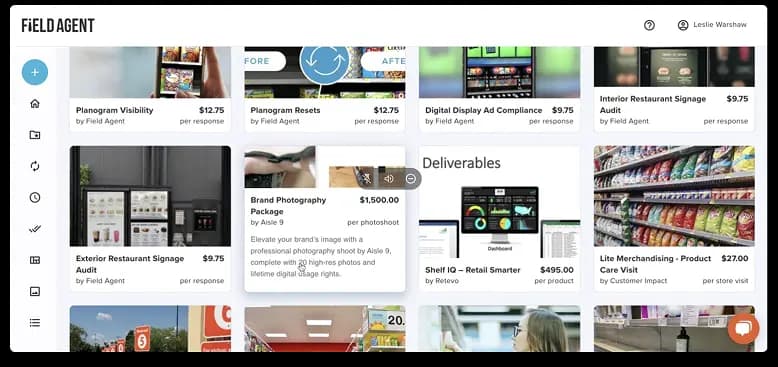
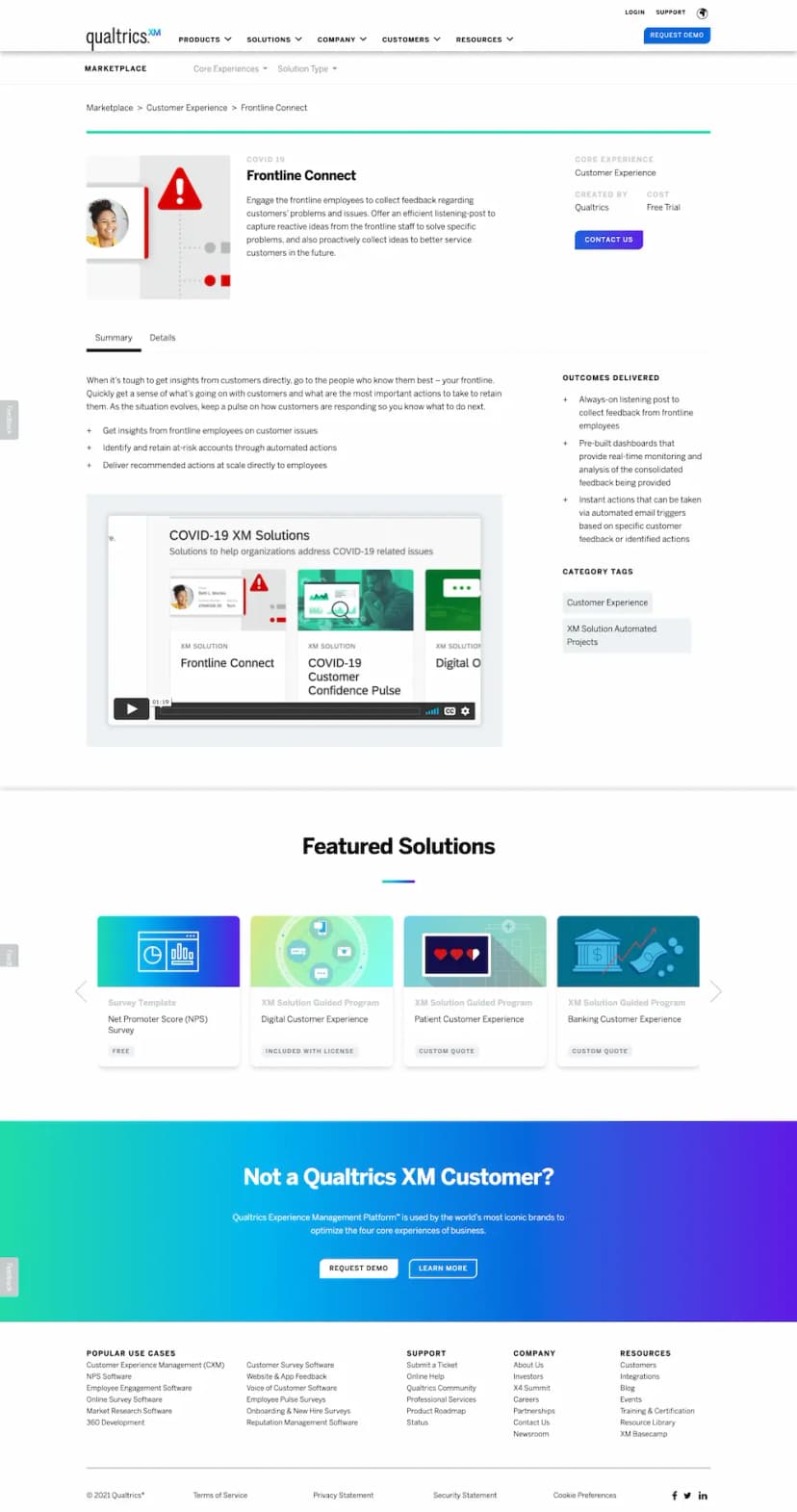
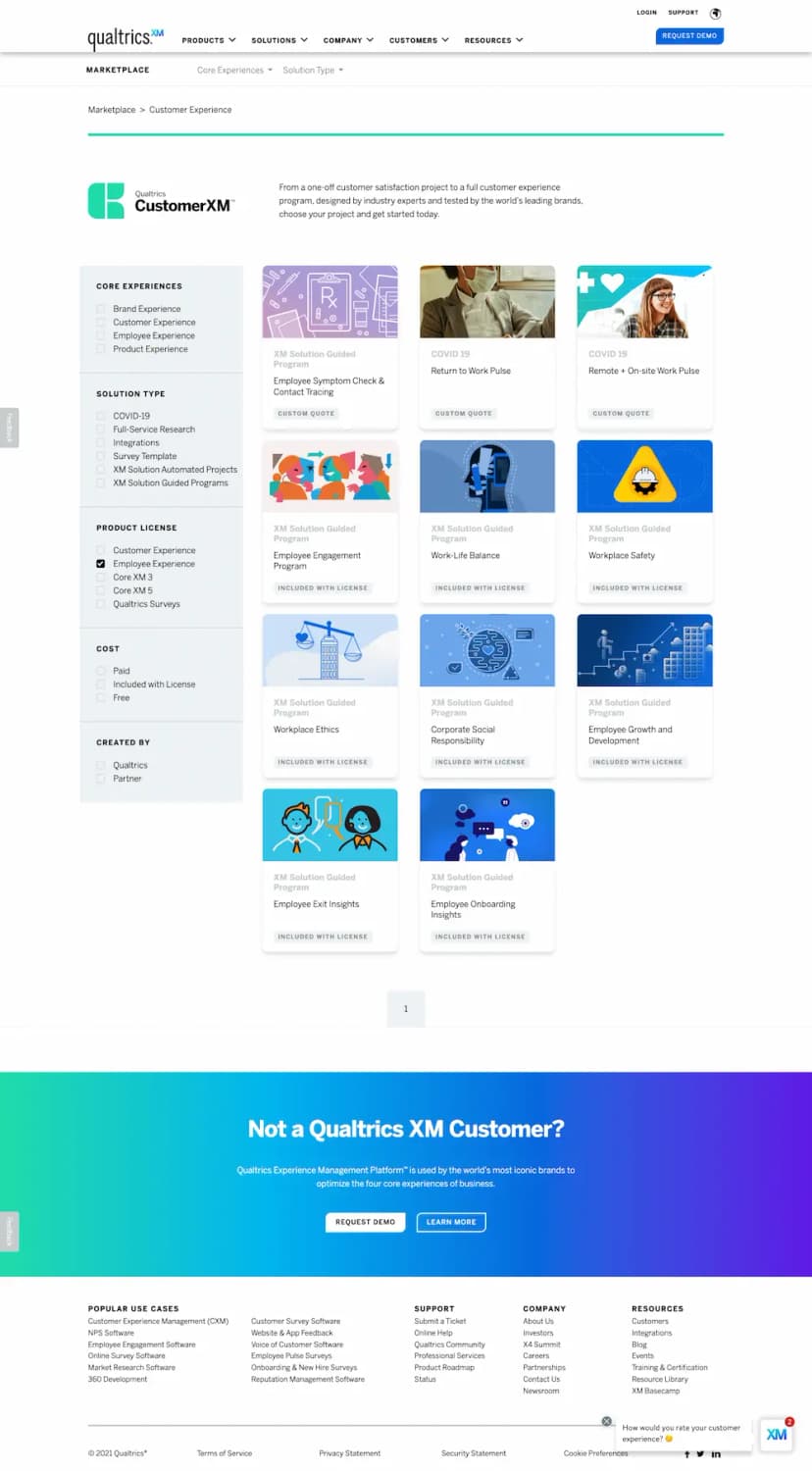
I looked for inspiration
I studied how other products showed their value and let users try different use cases.
Iterated on the workflow
I tested 2 task creation workflows and found the single-page option felt simpler. I chose the multi-page version because earlier choices affected later options.
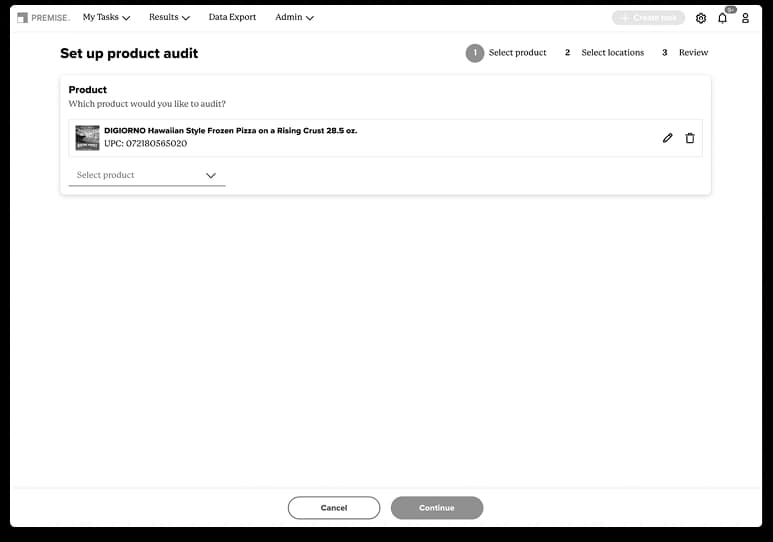
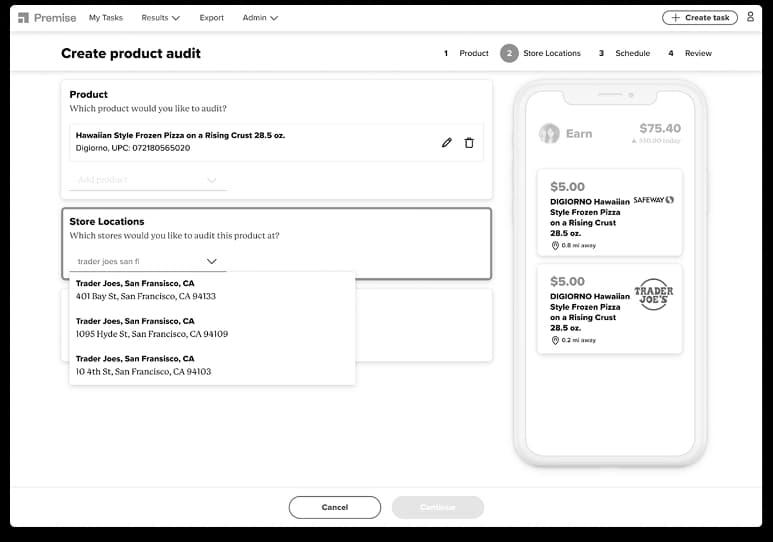
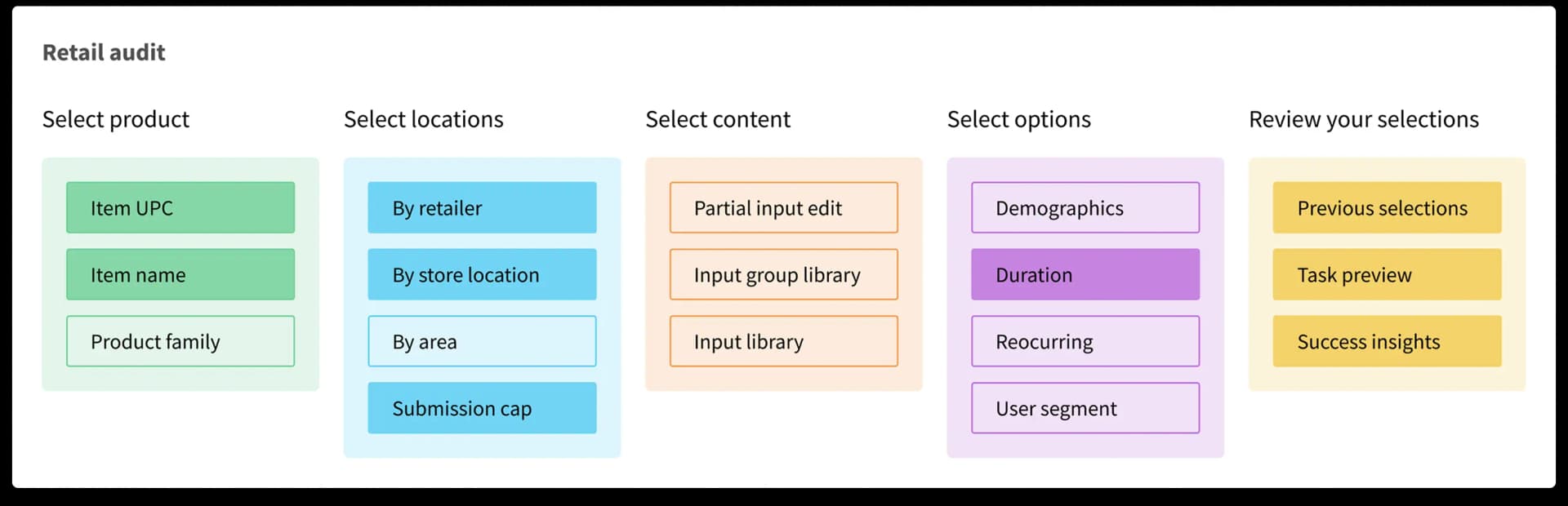
I applied systems thinking to scaling to various use cases
Each color is a page. Each block is a required feature.
The Experience
Introducing a Solution Library
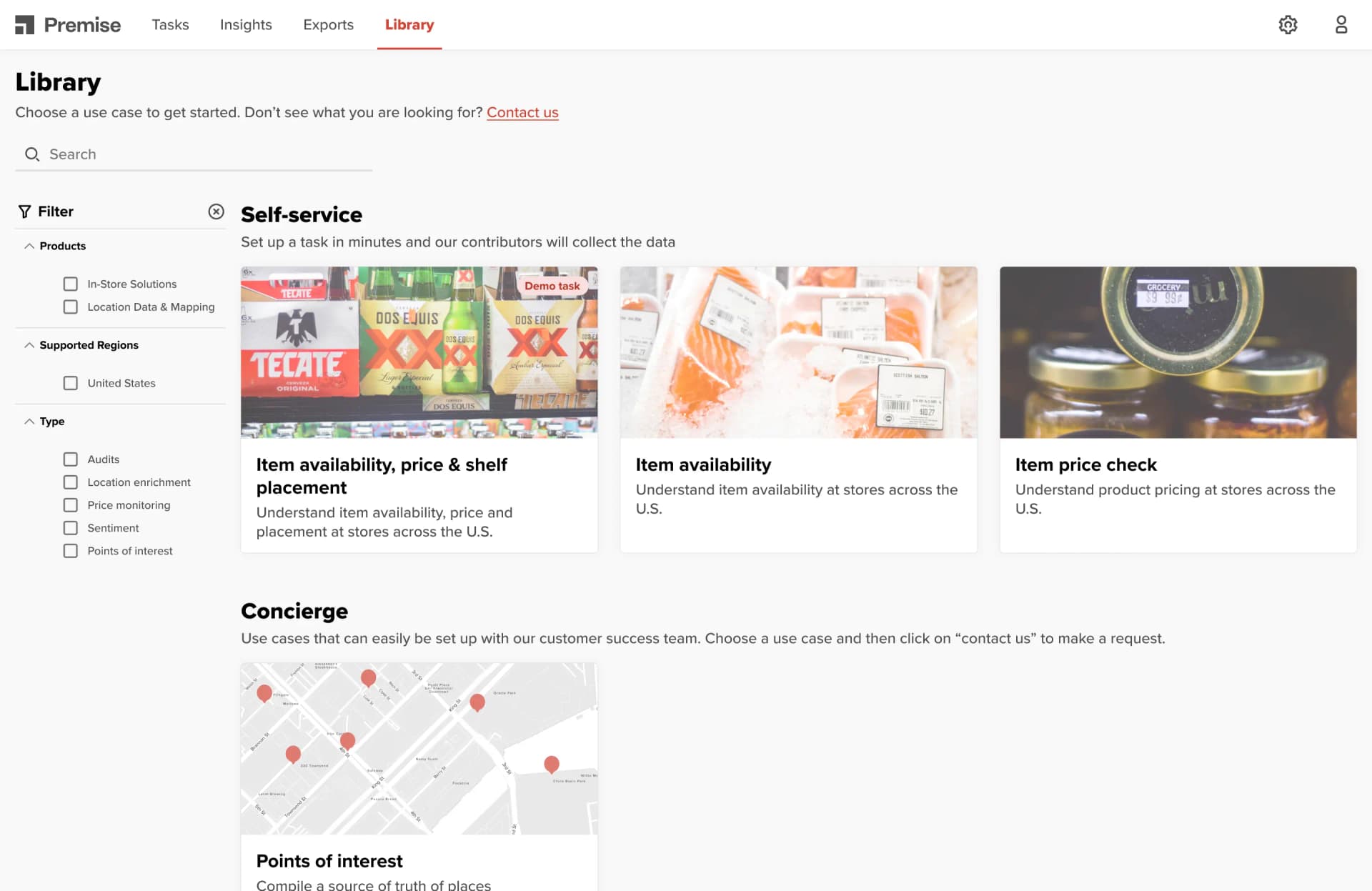
Show what we are capable of
Customers can now browse existing use cases to discover the platform's capabilities. Previously, they were unaware of what we could deliver.
Demonstrate the power of our global gig-worker network
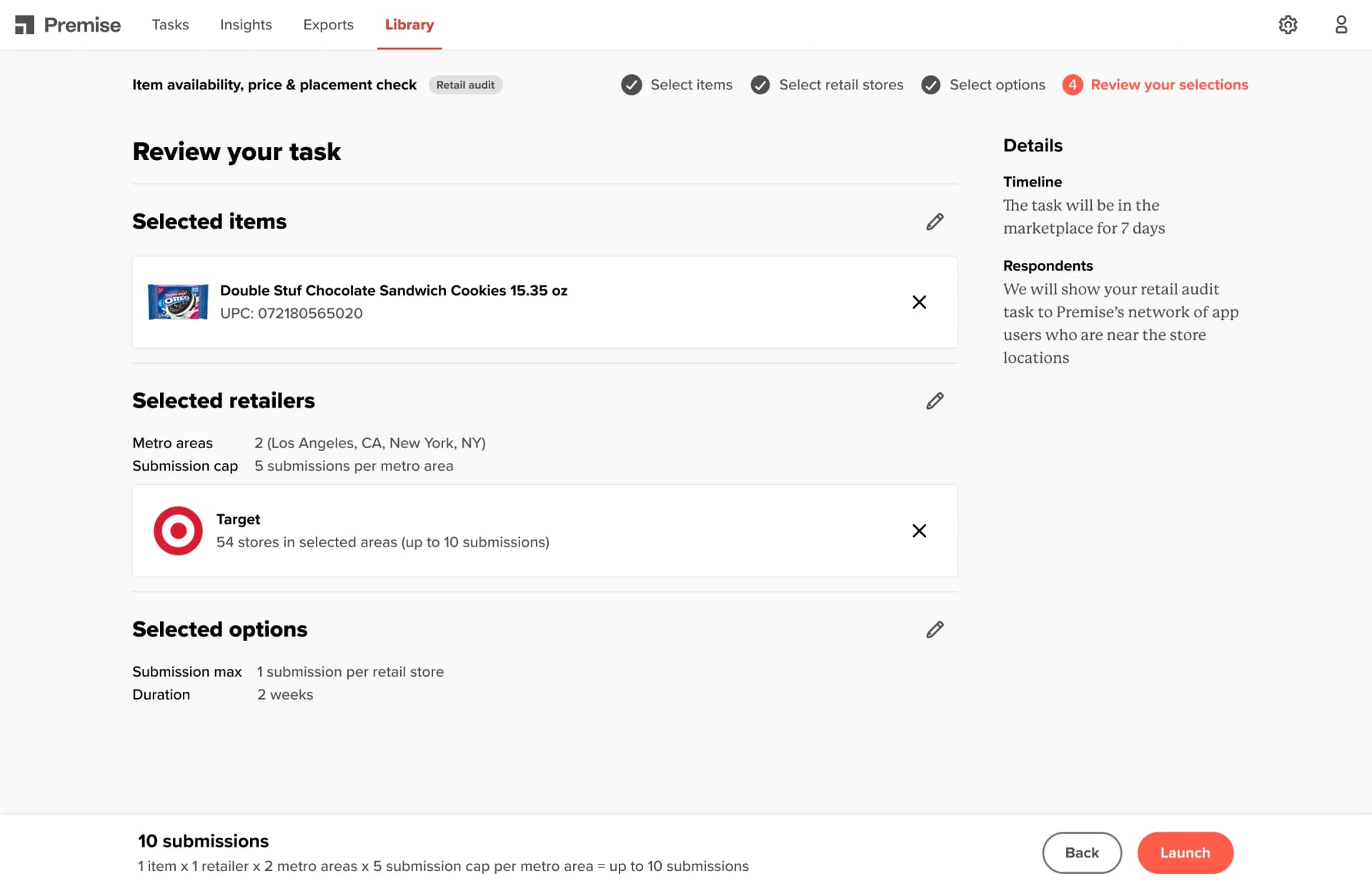
Customers can collect data via a guided self-service workflow and see the results in 1-2 days rather than 4-6 weeks. We experimented with a products API and locations API to create a Proof of Concept for the first use case around Product Availability.
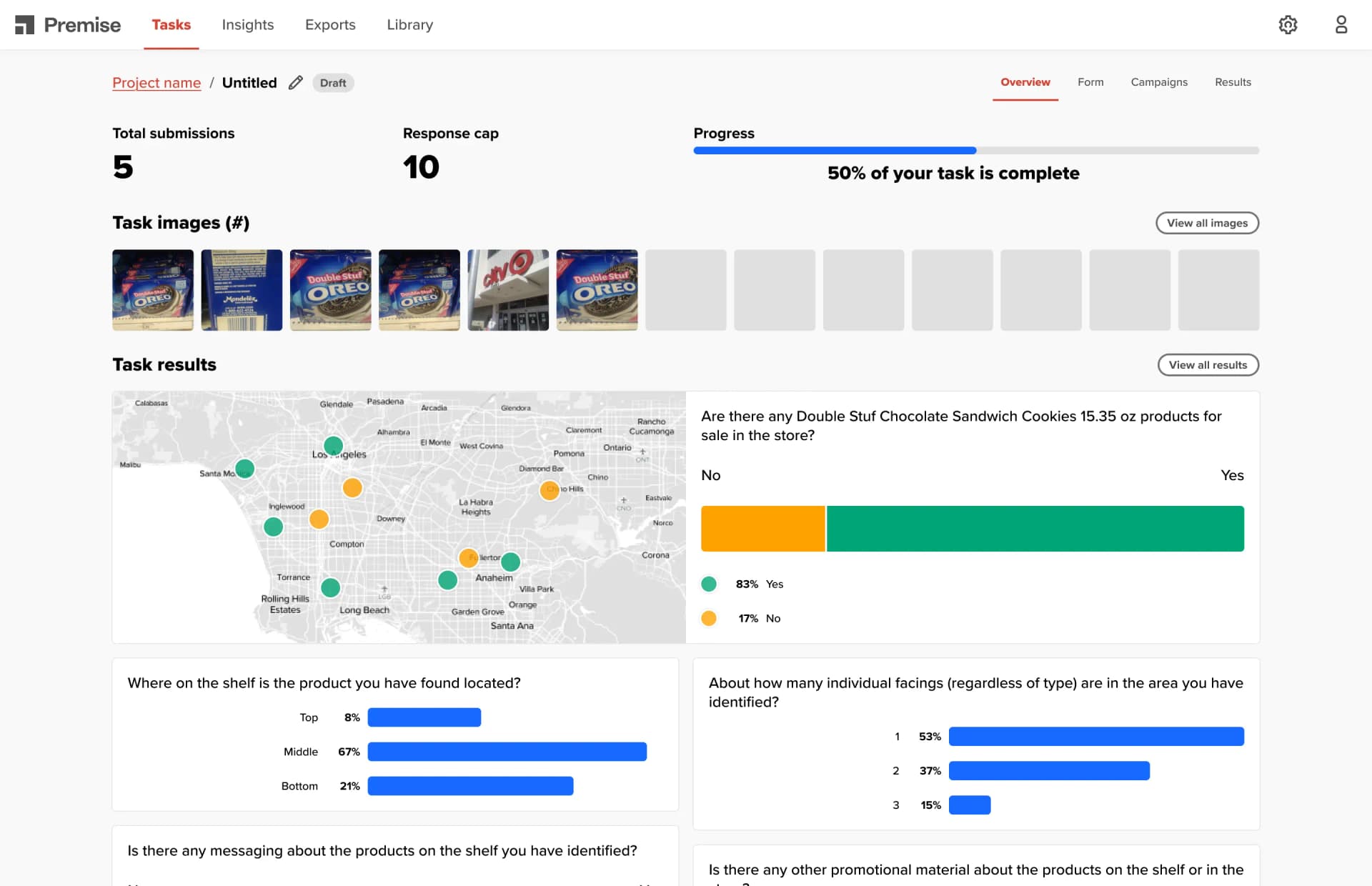
Deliver insights rather than a flat file
We designed a simple view of the results that could scale to different use cases with a module layout.
The Impact
Continuous learning & better alignment
We failed fast and learned critical lessons through this project. Most of the team was new to the company, so this experience proved to be the ultimate onboarding exercise.
- •Marketing needed to solve the lead generation problem before the product could generate PQLs. We were solving the wrong layer.
- •Sales targeted large enterprise—not SMB as leadership believed—making self-service too risky to bet on.
- •Our gig-worker network wasn’t ready for customer-run data collection, even with guardrails. The form builder and campaign tools had a steep learning curve and too many limitations.
A lightweight proof of concept clarified strategy and roadmap with leadership.
Want to see more?
Get in touch with me to see my in-depth case studies.