Information Design · Data Collection · Chrome Extension
What Would You Call This Color?
Crowd-sourcing a dataset on color perception to build a new information design piece.
The Origin
It started with someone else's data
In 2013, I made a visualization called Colorful Language using the World Color Survey: a dataset collected from 2,696 native speakers of 110 languages, each asked to identify 330 different colors. The survey had been conducted in remote field locations using physical color chips, paper forms, and decades of patience.
The resulting visualization explored how different languages carve up the color spectrum, and what that says about the relationship between language and perception. It became one of my favorite projects. But the dataset was old, the methodology was exhausting to replicate, and I kept wondering: what would this look like with fresh data? With English speakers in 2025?
So I decided to gather it myself.
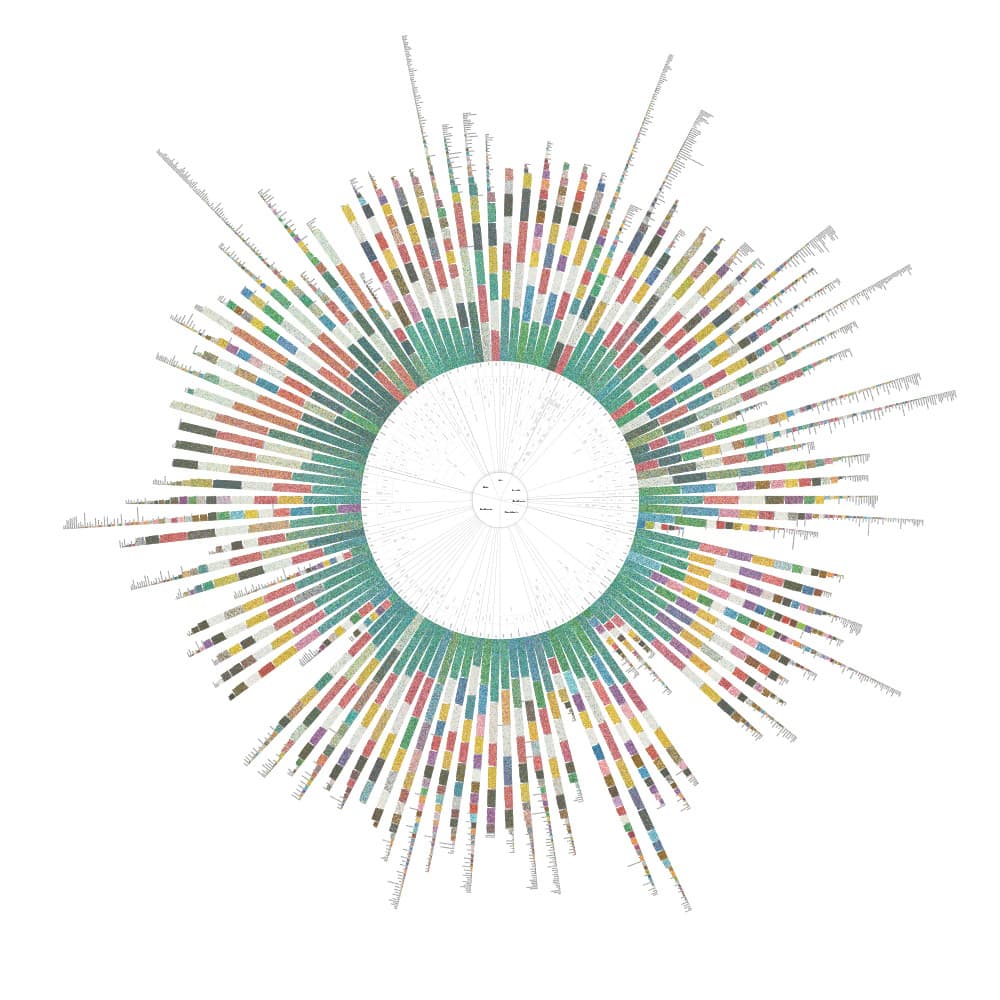
Colorful Language (2013). Data from the World Color Survey.
The Tool
A Chrome extension as a survey instrument
Color Namer is a Chrome extension that presents one color at a time and asks a single question: what would you call this? No multiple choice. No prompts. Just a color and a text field.
After you respond, it shows you what others said: each name rendered as a circle filled with the actual colors people associated with it, sized by how often that name was given. A circle packed with tight, uniform pixels means high agreement. A noisy, varied circle means people see something different depending on context, culture, or just personal history.
The extension works through 330 colors, the same set used in the original World Color Survey. Every response becomes part of the dataset.
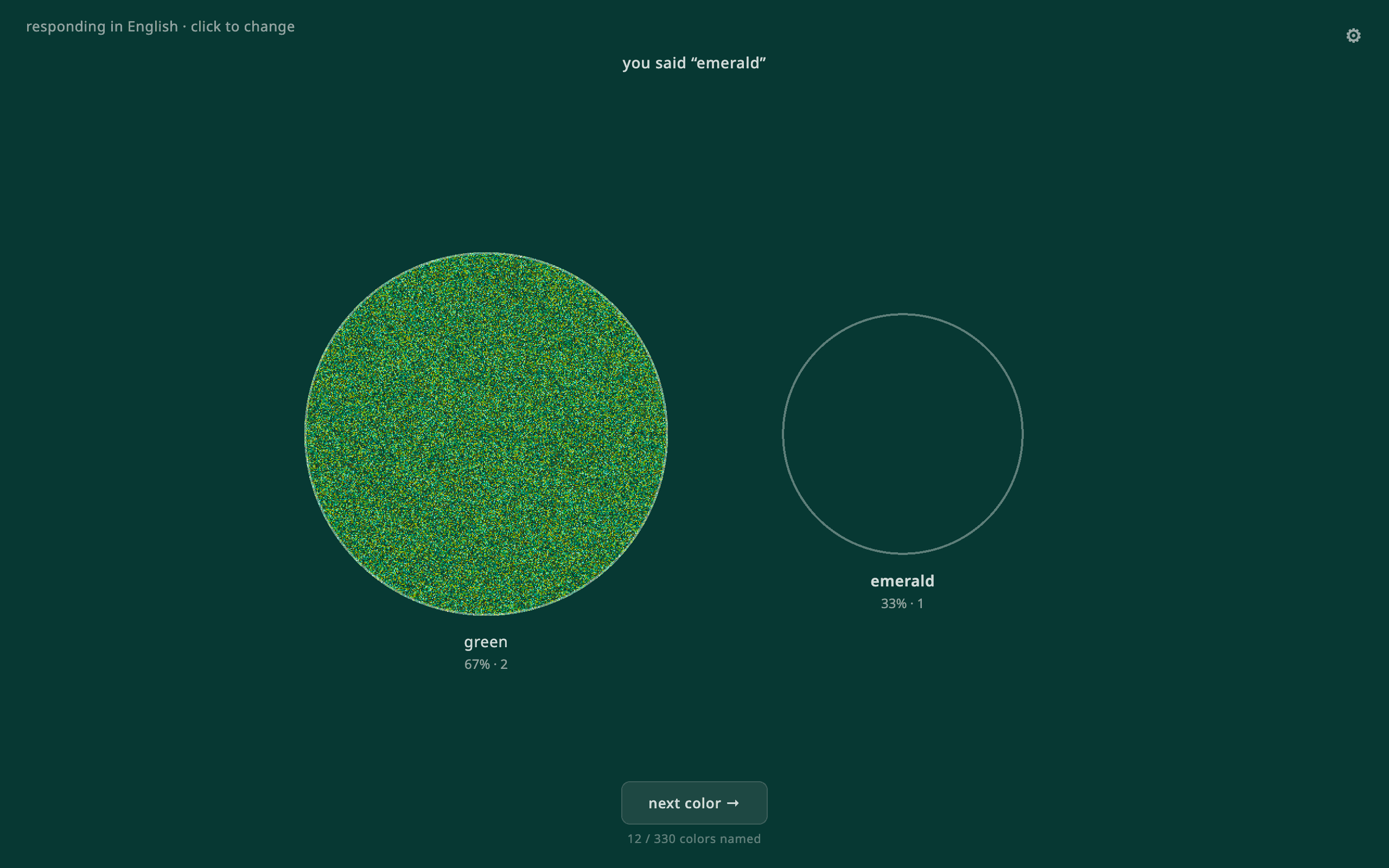
Early results with a small number of responses. As the dataset grows, these visualizations will become far richer.
What's Next
Building toward something larger
The extension is the data collection layer. The real goal is what comes after: a full information design piece built from this crowd-sourced dataset, exploring how English speakers in 2025 name, perceive, and disagree about color.
Are there generational differences? Do people who work with color professionally use more specific names? Does consensus around a color name correlate with how saturated or distinct that color is? I don't know yet. That's the point.
If you want to contribute a few minutes of responses, install the extension below. Each color you name makes the eventual visualization a little more honest.
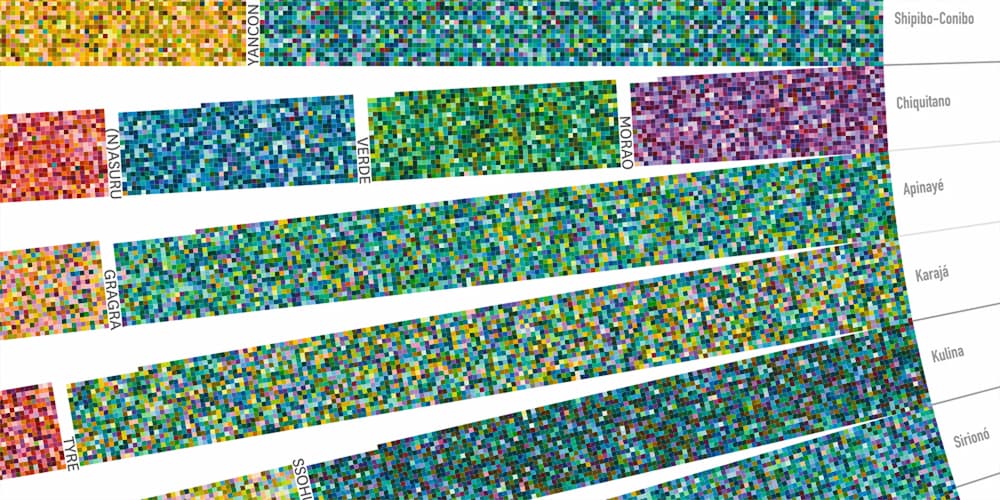
Detail from Colorful Language (2013): comparing like colors across languages.
Want to see more?
Get in touch with me to see my in-depth case studies.